
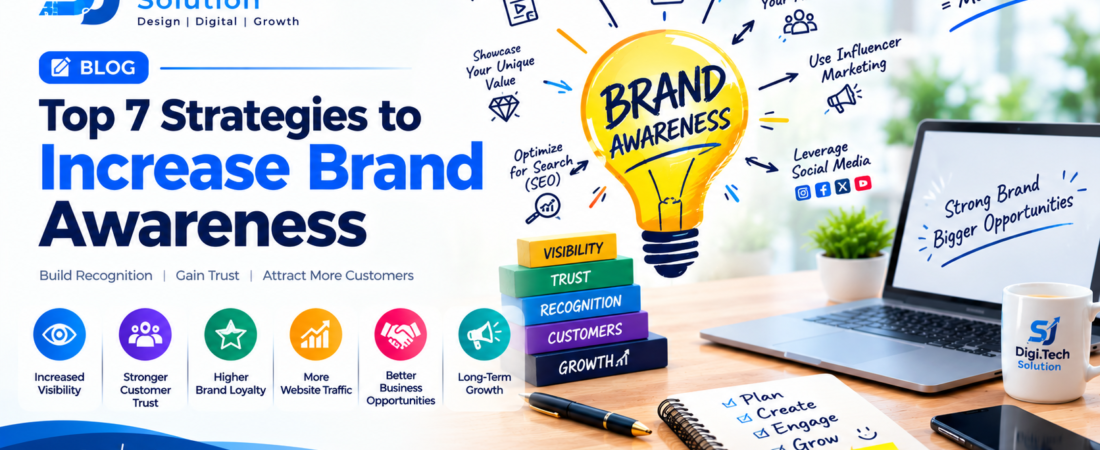
Strategies to Increase Brand Awareness
In today’s competitive digital world, building a strong brand is essential for business growth. Customers have many options when searching for products and services, so businesses need to stand out, communicate their value, and create a memorable identity. This is where brand awareness becomes important.
Brand awareness refers to how familiar people are with your business, products, services, name, logo, and overall identity. When potential customers recognise your brand and understand what you offer, they may be more likely to consider your business when they need a solution.
However, brand awareness does not happen overnight. It requires consistent communication, relevant content, a clear brand identity, and a marketing strategy designed around the right audience.
In this guide, we will explore 7 strategies to increase brand awareness that businesses can use to improve online visibility, connect with potential customers, build trust, and support long-term growth.
What Is Brand Awareness?
Brand awareness is the level of recognition and familiarity people have with a business or brand. It includes remembering your business name, recognising your logo, understanding your services, and associating your brand with a particular need or benefit.
For example, when someone sees your business logo on social media, visits your website, or recognises your brand in an advertisement, they may be developing familiarity with your business.
Brand awareness can be built through several channels, including social media marketing, search engine optimisation (SEO), content marketing, paid advertising, email communication, partnerships, and customer recommendations.
Why Is Brand Awareness Important?
Brand awareness supports business marketing in several ways:
Recognition: Helps people become familiar with your business.
Credibility: Consistent, professional communication can help create a trustworthy impression.
Audience reach: Marketing activities introduce your brand to relevant audiences.
Customer consideration: Familiarity can help customers remember your business when comparing options.
Long-term growth: A recognisable brand can support customer relationships and repeat engagement.
Brand awareness alone does not guarantee sales. It works best alongside a strong product or service, good customer experience, and a clear path for customers to take the next step.
1. Build a Strong and Consistent Brand Identity
A clear brand identity is the foundation of brand awareness. People should be able to recognise your business and understand what it represents across your website, social media profiles, advertisements, and other marketing materials.
Your brand identity includes your business name, logo, colours, typography, tone of voice, visual style, and key messages.
How to Build a Consistent Brand Identity
Create a professional logo: Choose a logo that reflects your business and remains recognisable at different sizes.
Select brand colours and fonts: Use a consistent colour palette and typography across your website, social media graphics, presentations, and advertisements.
Define your brand message: Explain what your business does, whom it helps, and what makes your offering relevant to customers.
Maintain a consistent tone: Decide whether your communication should feel professional, friendly, educational, innovative, or another style suited to your audience.
Prepare brand guidelines: Document your logo variations, colours, fonts, image style, and writing tone so that future content remains consistent.
Example
Imagine a digital marketing agency that uses different logos, colours, and messages across every social media platform. Potential customers may struggle to recognise the business. A consistent visual identity makes the agency easier to identify and helps create a more professional impression.
Pro tip: Review your website, social media profiles, business listings, and marketing materials. Update outdated branding and ensure your contact information and core business message are accurate.
2. Use Social Media Marketing to Reach Your Audience
Social media marketing is a practical way to introduce your brand to potential customers and maintain relationships with existing followers. Platforms such as Facebook, Instagram, LinkedIn, and YouTube offer different opportunities depending on your audience and content style.
The goal is not simply to publish as often as possible. It is to share useful, relevant content that helps people understand your brand and gives them a reason to engage.
Effective Social Media Brand Awareness Tactics
Publish educational posts: Answer common questions related to your products or services.
Share short videos: Explain a concept, demonstrate a product, or show how your service works.
Use visual storytelling: Create consistent graphics, carousels, and behind-the-scenes content.
Participate in conversations: Respond to comments and questions in a helpful, professional way.
Maintain a content calendar: Plan posts in advance to support consistent publishing.
Adapt content for each platform: Adjust the format and message to suit the audience and platform.
Choose Platforms That Match Your Audience
A business selling professional services to other companies may benefit from LinkedIn, while a visually focused brand may prioritise Instagram. Facebook can support community engagement and advertising, while YouTube can be useful for tutorials and demonstrations.
Start with the platforms that best fit your customers and resources. You do not need to be active everywhere.
Example
A local website design business could publish website improvement tips, show examples of its design process, share educational videos, and answer common questions about website development. Over time, this content can help potential customers understand the business and its expertise.
Pro tip: Measure more than likes and follower counts. Review reach, shares, profile visits, website clicks, relevant enquiries, and other metrics that match your objectives.
3. Invest in Search Engine Optimisation (SEO)
Search engine optimisation helps people discover relevant pages on your website through search engines. When your website provides useful answers to questions your audience is searching for, it creates another opportunity for people to discover your brand.
SEO is not only about ranking for your business name. It can also help your business appear for relevant topics, services, and problems your potential customers want to solve.
How SEO Can Support Brand Awareness
Research relevant keywords: Identify the phrases customers use when searching for your products, services, and information.
Create helpful website content: Publish service pages, informative blog posts, guides, and FAQs that address genuine customer needs.
Optimise page titles and descriptions: Write clear titles and descriptions that accurately communicate what each page offers.
Use descriptive headings: Organise content with meaningful H1, H2, and H3 headings to help readers navigate the page.
Improve website usability: Make your website mobile-friendly, easy to navigate, and clear about what visitors should do next.
Build relevant internal links: Connect related blog posts and service pages so visitors can discover more useful information.
Keep business information accurate: Ensure that contact details, service descriptions, and relevant business listings are consistent.
Example
Suppose a business offers social media management services. It could publish useful articles about content planning, social media advertising, and campaign measurement. These articles can introduce readers to the brand while answering relevant questions.
SEO takes time, and visibility depends on competition, content quality, technical factors, and other signals. There is no guarantee that a particular article will reach the first page of search results.
Pro tip: If your website uses WordPress with Rank Math, use it to review SEO titles, meta descriptions, focus keywords, headings, and other on-page elements. Treat the plugin’s recommendations as guidance rather than a guarantee of rankings.
4. Create Valuable and Shareable Content
Content marketing helps your business demonstrate knowledge, answer customer questions, and communicate its value. Useful content can also give people a reason to share your brand with others.
Instead of promoting your services in every post, create content that educates, informs, inspires, or helps your audience solve a problem.
Types of Content That Can Increase Brand Awareness
Blog articles: Explain topics related to your industry and answer frequently asked questions.
Infographics: Present information, comparisons, or processes in an easy-to-understand visual format.
Short videos: Share quick tips, product demonstrations, tutorials, and common mistakes to avoid.
Case studies: Explain a real project, the problem addressed, the work completed, and verified outcomes where available.
Checklists and guides: Provide practical resources that people can save and revisit.
Frequently asked questions: Address common concerns about your products, pricing, process, or services.
Follow a Simple Content Framework
A useful content plan can include three categories:
Educational content: Helps your audience learn something useful.
Trust-building content: Shows your process, expertise, customer feedback, or project experience accurately.
Promotional content: Explains your services, offers, and how people can work with you.
The right balance depends on your audience and business objectives. Each post should have a clear purpose.
Example
SJ Digi.Tech Solution could publish an article about improving a business website, create a carousel explaining common social media mistakes, and produce a short video about campaign planning. Each piece can reinforce the brand’s digital marketing expertise while helping potential customers.
Pro tip: Focus on quality and usefulness instead of producing large quantities of repetitive content. Repurpose a strong blog article into a video, carousel, email, or short social media post while adapting it for each format.
5. Use Paid Advertising to Expand Brand Reach
Organic marketing can help build a long-term presence, but paid advertising provides another way to introduce your brand to selected audiences. Depending on your campaign objective and platform, advertising can help increase visibility, attract website visitors, promote a launch, or generate enquiries.
Common options include Meta Ads on Facebook and Instagram, Google Ads, LinkedIn Ads, and YouTube advertising, subject to platform availability and eligibility.
How to Use Paid Advertising for Brand Awareness
Define your campaign goal: Decide whether the campaign should focus on awareness, reach, video views, website traffic, or another supported objective.
Understand your target audience: Consider relevant locations, interests, professional characteristics, or other permitted targeting options.
Create recognisable advertisements: Use consistent brand colours, logos, clear messaging, and visuals that fit your audience.
Test different creatives: Compare alternative headlines, images, videos, and messages to understand what resonates.
Set a realistic budget: Begin with an amount your business can afford to test and evaluate before increasing spending.
Monitor campaign performance: Review available metrics such as reach, impressions, frequency, video views, clicks, and conversions where relevant.
Brand Awareness vs Lead Generation
Brand awareness campaigns are generally designed to help more relevant people become familiar with your brand. Lead generation campaigns are designed to encourage potential customers to submit an enquiry or provide their details.
These goals are related but not identical. Choose the campaign objective that matches what you want people to do, and use appropriate metrics to evaluate it.
Example
A new digital marketing agency could run a targeted campaign introducing its services to relevant local businesses. The creative might explain the services offered and invite interested business owners to visit the website. Campaign performance should be reviewed against the chosen objective rather than assumed from impressions alone.
Pro tip: Make sure the landing page or business profile matches the advertisement. Clear information, a consistent message, and an easy next step help create a better experience for people who discover your brand through an ad.
6. Collaborate With Influencers and Relevant Partners
Collaborations can introduce your brand to people who already follow a creator, business, or organisation relevant to your industry. A suitable partner may help you reach a new audience and present your products or services in a context that feels natural.
However, follower count alone does not determine whether a collaboration is useful. Audience relevance, credibility, content quality, and alignment with your brand are also important.
How to Plan a Successful Collaboration
Choose relevant partners: Look for creators, professionals, or businesses whose audiences match your intended customers.
Review audience engagement: Examine the quality of comments, content consistency, and whether followers appear genuinely interested in the subject.
Agree on clear deliverables: Define the format, message, timing, links, and expected responsibilities before the collaboration begins.
Allow authentic communication: Give partners accurate information and clear brand guidelines while allowing them to communicate naturally with their audience.
Disclose commercial relationships: Follow applicable advertising disclosure requirements and platform rules for sponsored or paid partnerships.
Measure the results: Use campaign links, referral traffic, engagement, enquiries, or other appropriate indicators to evaluate performance