
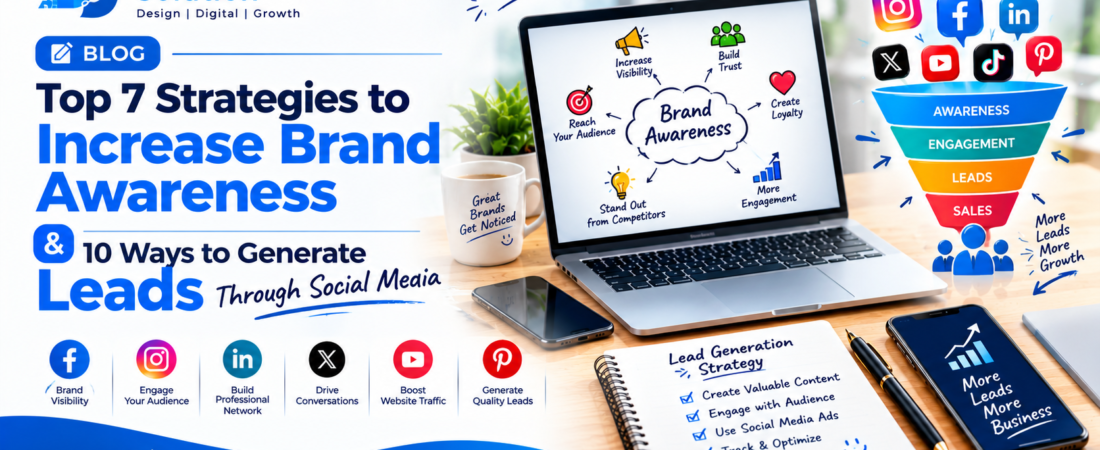
10 Ways to Generate Leads Through Social Media
Social media has become an important marketing channel for businesses that want to connect with potential customers, promote their services, and generate new business opportunities. Platforms such as Facebook, Instagram, LinkedIn, and YouTube allow businesses to reach relevant audiences, share valuable information, and encourage people to take action.
However, getting likes, comments, and followers does not automatically generate business leads. Successful social media lead generation requires a clear strategy, useful content, the right audience, and a simple process that turns interested people into potential customers.
Whether you run a startup, a small business, a professional service company, or an established enterprise, social media can support your lead generation goals when used correctly.
In this guide, we will explore 10 effective ways to generate leads through social media, including lead magnets, targeted advertising, engaging content, social media optimisation, and lead nurturing techniques.
What Is Social Media Lead Generation?
Social media lead generation is the process of attracting potential customers through social media platforms and encouraging them to share their contact details or express interest in your products or services.
A lead might be someone who submits an enquiry form, requests a quotation, registers for a webinar, downloads a guide, or contacts your business through direct messages.
For example, a digital marketing agency could publish an educational post about online advertising and invite interested business owners to request a consultation. People who respond with genuine interest become potential leads for the agency.
Why Is Social Media Lead Generation Important?
Social media lead generation can help businesses:
Reach potential customers who match their target audience.
Build relationships through useful and relevant content.
Promote products and services to interested people.
Collect enquiries through forms, websites, and messaging channels.
Retarget eligible audiences using supported advertising tools.
Measure campaign performance and improve marketing decisions.
The quality of leads matters just as much as the quantity. A smaller number of relevant prospects may be more valuable than hundreds of enquiries from people who are unlikely to become customers.
1. Identify Your Target Audience
The first step in generating leads through social media is understanding whom you want to attract. Without a clear target audience, your content and advertising may reach people who have little interest in your products or services.
Start by identifying the customers who are most likely to benefit from your offering.
How to Identify Your Ideal Customers
Consider the following questions:
What problems do your products or services solve?
Who experiences these problems?
Which locations do you serve?
What questions do potential customers frequently ask?
What budget or requirements might influence their decisions?
Which social media platforms do they use?
For a B2B company, relevant characteristics may include industry, company size, job role, and business needs. For a local service provider, location, service requirements, and customer preferences may be more important.
Example
If SJ Digi.Tech Solution wants to generate leads for its digital marketing services, it could focus on businesses that need social media management, online advertising, website development, or help improving their online presence.
Understanding these needs makes it easier to create relevant posts and campaigns.
Pro tip: Use customer conversations, website analytics, previous enquiries, and available social media insights to refine your audience. Avoid making assumptions without checking the evidence.
2. Create Valuable and Educational Content
Useful content gives potential customers a reason to pay attention to your business. Instead of promoting your services in every post, answer questions, explain common problems, and share information that helps your audience make better decisions.
Educational content can introduce your expertise before someone is ready to purchase.
Types of Content That Can Generate Leads
How-to posts: Explain how to solve a common problem.
Short videos: Demonstrate a product, process, or service.
Carousels: Break complex topics into easy-to-understand steps.
Case studies: Describe real projects and verified outcomes.
Checklists: Help audiences evaluate their needs.
Frequently asked questions: Answer common customer concerns.
Live sessions or webinars: Explain topics and respond to audience questions.
Example
A digital marketing agency could publish a carousel titled “5 Signs Your Business Needs a Better Website.” The final slide could invite readers to request a website consultation.
This approach connects useful information with a relevant next step.
Pro tip: Give each post one main purpose and one clear call to action. Depending on the content, invite people to read a guide, visit a service page, ask a question, or request a consultation.
3. Use Social Media Lead Generation Ads
Paid social media advertising can help businesses reach selected audiences and encourage them to enquire about products or services. Depending on eligibility and available features, platforms such as Facebook and Instagram offer lead-focused advertising options through Meta’s advertising tools.
Lead ads may allow users to submit their details through an in-platform form, reducing the number of steps needed to express interest.
How to Approach a Lead Generation Campaign
Step 1: Define your objective. Decide whether you want enquiries, consultation requests, quotation requests, registrations, or another meaningful action.
Step 2: Select the right audience. Use relevant, permitted targeting options based on your market and customer profile.
Step 3: Create a clear offer. Explain what people will receive, such as a consultation, product demonstration, or service estimate.
Step 4: Design an effective advertisement. Use a relevant image or video, a clear headline, concise copy, and an appropriate call to action.
Step 5: Build a suitable form. Ask only for information needed to follow up effectively. Too many fields may discourage completion.
Step 6: Follow up promptly. Contact interested prospects professionally, explain the next step, and record the outcome.