
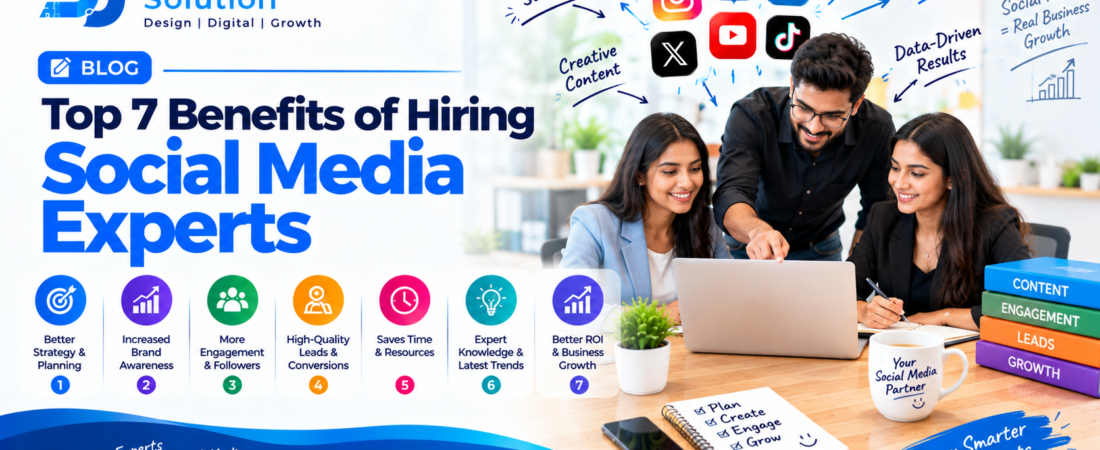
Top 7 Benefits of Hiring Social Media Experts
Social media has become an important part of how businesses communicate with customers, promote their services, and build brand awareness. Platforms such as Instagram, Facebook, LinkedIn, and YouTube give businesses opportunities to connect with potential customers and develop lasting relationships. However, achieving meaningful results requires more than publishing posts occasionally.
Businesses need a clear strategy, engaging content, consistent communication, and regular performance analysis. Managing all these activities can become challenging when business owners are already responsible for sales, customer service, operations, and other daily tasks.
This is where hiring social media experts can make a difference. Professional social media experts help businesses plan their online presence, create relevant content, manage audience interactions, and support their marketing objectives.
Whether you operate a startup, a small business, or an established company, working with experienced professionals can help you manage social media more effectively.
In this article, we explore the top 7 benefits of hiring social media experts, how they support business growth, and what to consider before choosing a social media marketing partner. & Social media Experts
What Are Social Media Experts?
Social media experts are professionals who help businesses plan, manage, and improve their presence on social media platforms. Depending on their services and experience, they may handle content planning, graphic design, video content, account management, community engagement, advertising, and performance reporting.
Their role is not simply to publish posts. They work to align social media activities with business objectives, such as increasing brand awareness, attracting relevant audiences, generating enquiries, or supporting customer retention.
For example, a digital marketing agency may develop a content calendar, design branded posts, manage Facebook and Instagram accounts, respond to customer enquiries, and run paid advertising campaigns when appropriate.
The exact responsibilities depend on the agreement between the business and the professional or agency.
1. Save Time and Focus on Core Business Activities
One of the biggest benefits of hiring social media experts is saving time. Managing social media consistently requires research, planning, content creation, publishing, monitoring, and reporting.
When business owners manage every task themselves, social media can take time away from essential activities such as serving customers, improving products, managing employees, and developing business relationships.
A social media professional can help organise these responsibilities and create a more manageable workflow.
How social media experts save time
Content planning: They prepare a content calendar so that posts can be planned in advance instead of created at the last minute.
Post creation: They coordinate captions, graphics, videos, and other content formats according to the business’s needs.
Publishing and scheduling: They can schedule suitable posts in advance using appropriate tools.
Account monitoring: They help monitor comments, messages, and mentions according to the agreed schedule.
Performance reporting: They organise analytics and highlight areas that may need improvement.
For example, a local business owner may spend several hours each week deciding what to post, designing graphics, and checking account performance. A professional can establish a repeatable process that reduces the owner’s direct involvement in routine social media tasks.
The time saved can then be used to improve customer service, develop new products, or pursue sales opportunities.
Business tip: Before outsourcing social media management, identify which activities consume the most time. This will help you choose a service package that addresses your actual needs.Social Media Experts & Social media Experts
2. Create Professional and Consistent Brand Content
Your social media profiles often form part of a potential customer’s first impression of your business. Inconsistent visuals, unclear messaging, and irregular content can make it difficult for people to understand what your brand offers.
Social media experts help maintain a consistent brand identity across platforms.
They can coordinate colours, typography, logos, image styles, captions, and tone of voice so that your content presents a recognisable business identity.
Why professional content matters
Consistent branding: A uniform visual style helps audiences recognise your business across different posts and channels.
Clear communication: Well-written captions explain your products or services in a way that is easier for customers to understand.
Audience relevance: Content can be designed around customer questions, interests, and challenges.
Improved presentation: Professional graphics and well-produced videos can help communicate information clearly.
Content variety: A balanced plan may include educational posts, short videos, customer stories, service explanations, and promotional content.
For example, a website design company could publish website improvement tips, explain its design process, share project examples, and introduce its services through a consistent visual theme.
Instead of repeatedly posting advertisements, the company can use a mixture of educational and promotional content to provide value to its audience.
Professional content does not automatically guarantee engagement or sales. Its purpose is to communicate clearly, represent the brand consistently, and give potential customers useful reasons to interact.& Social media Experts
3. Improve Audience Engagement and Customer Relationships
Social media allows businesses to communicate directly with their audiences. However, meaningful engagement requires more than collecting likes and followers.
Social media experts can develop content and community management practices that encourage relevant conversations and help businesses respond to customers more effectively.
Ways experts can improve engagement
Interactive content: Questions, polls, quizzes, and discussion posts can encourage people to participate.
Relevant topics: Content based on audience needs gives followers a reason to read, comment, save, or share.
Consistent responses: Timely, helpful replies can make customers feel acknowledged.
Community management: Monitoring comments, mentions, and direct messages helps businesses identify questions and concerns.
Content analysis: Reviewing interactions can reveal which topics interest the audience most.
For example, a digital marketing agency might publish a post asking business owners about their biggest online marketing challenge. The responses can help the agency understand audience needs and plan future educational content.
Similarly, answering questions about website development or advertising services can help potential customers understand their options.
Strong customer relationships develop through genuine communication, reliable service, and consistent follow-through. Social media experts can support this process, but businesses must also provide accurate information and deliver on their promises.
4. Develop a Clear Social Media Marketing Strategy
Posting without a strategy can lead to inconsistent messaging, repetitive content, and unclear business outcomes. Social media experts help businesses move from random posting to planned marketing activities.
A useful strategy starts with understanding the business, its audience, its competitors, and its objectives.
Important elements of a social media strategy
Business goals: Define whether the priority is brand awareness, website traffic, customer engagement, enquiries, or sales.
Target audience: Identify the people most likely to need your products or services, including their interests, challenges, and buying preferences.
Platform selection: Choose social media platforms based on audience behaviour, industry, content format, and available resources.
Content pillars: Establish a few core topics, such as educational content, service information, customer stories, and company updates.
Publishing calendar: Plan topics, formats, and publishing dates to maintain consistency.
Performance measurement: Select metrics that reflect the business objectives and review them regularly.
For example, a business-to-business company may prioritise LinkedIn for professional networking and industry education, while a visually focused consumer brand may invest more effort in Instagram.
The right platform mix depends on where the intended customers spend their time and how they make purchasing decisions.
A professional strategy also provides a framework for testing new ideas. Instead of assuming a particular content format will work, the business can publish relevant content, review the results, and refine its approach.
5. Manage Social Media Advertising More Effectively
Organic social media content and paid advertising serve related but different purposes. Organic content helps businesses maintain a presence and develop relationships, while paid campaigns can help reach selected audiences according to platform targeting options.
Social media experts with advertising experience can help plan and manage campaigns on platforms such as Facebook and Instagram through Meta Ads Manager.
Their responsibilities may include campaign planning, audience research, creative development, budget allocation, tracking setup, and performance optimisation.
How professional ad management helps
Campaign objective selection: The campaign should match the intended outcome, such as awareness, website visits, leads, or sales.
Audience planning: Targeting can be designed around relevant audience characteristics and available platform options.
Creative testing: Different headlines, images, videos, and messages can be tested to understand what resonates with the audience.
Budget monitoring: Campaign spending can be reviewed against the agreed budget and business objectives.
Conversion tracking: Appropriate tracking helps measure actions such as form submissions, calls, purchases, or other defined conversions.
Performance reporting: Results can be reviewed to identify opportunities for improvement. If Yo want To Digital Marketing services Cantact with usSocail medi experts