Below is a WordPress-ready SEO blog for SJ Digi.Tech Solution, with Rank Math SEO settings, a clear heading structure, practical advice, FAQs, and internal-link suggestions. The article focuses on five major social media marketing platforms and helps businesses choose the right ones for their goals.
Rank Math SEO settings
SEO title
5 Best Platforms for Social Media Marketing
Focus keyword
best platforms for social media marketing
URL slug
best-social-media-marketing-platforms
Meta description
Discover the 5 best platforms for social media marketing. Compare Facebook, Instagram, LinkedIn, YouTube, and TikTok to grow your business online.
Suggested secondary keywords
social media marketing platforms
best social media platforms for business
social media marketing strategy
social media platforms for small businesses
business social media marketing
Category
Digital Marketing
Tags
Social Media Marketing, Facebook Marketing, Instagram Marketing, LinkedIn Marketing, YouTube Marketing, Digital Marketing
Complete blog article
Copy the following article into a WordPress post using the Block Editor. Set the article title as the H1 and use H2 and H3 headings for the sections below.
5 Best Platforms for Social Media Marketing
Social media marketing has become an important part of growing a business online. From small businesses and startups to large enterprises, companies use social media to connect with customers, build brand awareness, promote products and services, and generate leads.
However, choosing the right platform can be challenging. Every social media platform has a different audience, content format, and marketing purpose. Some platforms are suitable for building professional relationships, while others are more effective for visual storytelling, video marketing, community engagement, or paid advertising.
The best approach is not necessarily to use every platform. Instead, businesses should select platforms that match their target audience, marketing goals, content resources, and budget.
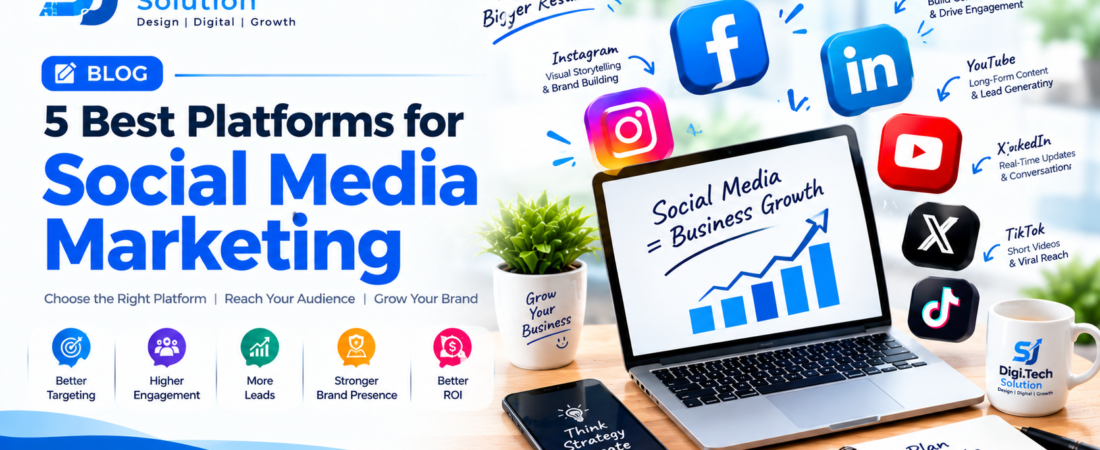
In this guide, we will explore the 5 best platforms for social media marketing: Facebook, Instagram, LinkedIn, YouTube, and TikTok. You will learn their key benefits, suitable business types, content ideas, and how to choose the right platform for your marketing strategy.
Why Is Social Media Marketing Important for Businesses?
Social media marketing helps businesses communicate with potential customers where they spend time online. A consistent strategy can support several business objectives.
1. Build Brand Awareness
Regularly publishing useful and relevant content helps people discover your business. Posts, short videos, educational graphics, and customer stories can introduce your products or services to new audiences.
2. Connect With Your Target Audience
Social media allows businesses to interact with customers through comments, messages, polls, and other engagement features. These interactions can help you understand customer questions, interests, and preferences.
3. Generate Leads and Sales
Businesses can use organic content and paid advertising to direct interested people toward a website, product page, enquiry form, or messaging channel. Results depend on the offer, targeting, creative quality, budget, and customer experience.
4. Build Trust and Credibility
Educational content, demonstrations, behind-the-scenes updates, and genuine customer feedback can help people understand what your business offers. Clear communication and prompt responses also support customer confidence.
5. Measure Marketing Performance
Most major platforms provide analytics that help businesses evaluate reach, engagement, video views, clicks, and other available metrics. These insights can guide future content and campaign decisions.
1. Facebook: A Versatile Platform for Business Marketing
Facebook is one of the most versatile platforms for businesses that want to build a community, share updates, communicate with customers, and run paid advertising campaigns.
Businesses can create a Facebook Page, publish posts and videos, share offers, respond to messages, and participate in relevant community activities. Depending on the audience and campaign objective, Facebook can support both brand awareness and lead generation.
Key Benefits of Facebook Marketing
Business presence: Create a dedicated Page for your brand, services, and contact details.
Community building: Share useful information and engage with followers.
Paid advertising: Use Meta advertising tools to reach selected audiences, subject to available targeting options and policies.
Customer communication: Respond to enquiries and provide business updates.
Content variety: Publish images, videos, Reels, text updates, and other supported formats.
Best Content Ideas for Facebook
Businesses can share service explainers, customer FAQs, product demonstrations, educational posts, event announcements, testimonials, and promotional offers. Short videos can help explain services in a more engaging way.
For example, a digital marketing agency could publish a post explaining how lead generation campaigns work, followed by a short case study using verified results or a video answering common advertising questions.
Who Should Use Facebook?
Facebook can be useful for local businesses, service providers, retailers, educational institutions, restaurants, and companies that want to build a community or test paid social campaigns. Its effectiveness will depend on whether your target customers use the platform and how well your content meets their needs.
Facebook Marketing Tip
Complete your business Page with accurate contact details, a clear description, a recognisable profile image, and a strong cover image. Publish consistently, respond professionally to messages, and track meaningful actions such as qualified enquiries rather than focusing only on likes.
2. Instagram: Best for Visual Branding and Short-Form Content
Instagram is a visual-first social media platform that helps businesses showcase their identity through images, short videos, Stories, Reels, and other supported formats.
It can be particularly useful for brands that depend on visual presentation, including fashion businesses, restaurants, beauty services, designers, travel companies, creators, and digital agencies.
Key Benefits of Instagram Marketing
Visual storytelling: Present products, services, designs, and brand personality.
Short-form videos: Use Reels to demonstrate products, share tips, or explain a process.
Stories: Share timely updates, polls, questions, and behind-the-scenes content.
Audience interaction: Respond to comments and direct messages.
Paid campaigns: Use Meta advertising tools to promote suitable Instagram content and campaigns.
Best Content Ideas for Instagram
Create a mix of educational carousels, service highlights, product demonstrations, FAQs, short tutorials, and behind-the-scenes videos. Use a consistent visual style so people can recognise your brand across posts.
A graphic design agency, for example, could share logo design concepts, explain common branding mistakes, publish website design previews, and create short videos showing how a design project develops.
Who Should Use Instagram?
Instagram is a strong option for businesses with visual products or services, brands targeting audiences who use the platform, creators, and businesses that can regularly produce appealing visual content.
B2B companies can also use Instagram to show their team, company culture, work process, and brand personality.
Instagram Marketing Tip
Make your profile easy to understand. Explain what your business does, whom it helps, and how people can contact you. Use clear calls to action, create useful content for your intended audience, and review saves, shares, profile visits, and website clicks where available.
Do not rely on hashtags alone. Content quality, relevance, creative presentation, and audience response all matter to an effective marketing approach.
3. LinkedIn: Best for B2B Marketing and Professional Networking
LinkedIn is a professional networking platform that can help businesses build industry credibility, connect with decision-makers, attract talent, and develop business relationships.
It is especially relevant for business-to-business (B2B) companies, consultants, software providers, recruitment firms, professional service providers, and agencies selling services to other businesses.
Key Benefits of LinkedIn Marketing
Professional visibility: Present your business expertise and services to a professional audience.
B2B networking: Build relationships with potential clients, partners, and industry professionals.
Thought leadership: Publish useful insights, practical guides, and informed industry commentary.
Lead generation: Encourage relevant prospects to visit your website or enquire about your services.
Employer branding: Share company updates, team achievements, and workplace culture.
Best Content Ideas for LinkedIn
Publish industry insights, practical business advice, professional articles, project lessons, service explanations, team updates, and informative document posts. Focus on helping your audience solve real problems instead of publishing only promotional messages.
For example, a digital marketing agency could explain how businesses should evaluate lead quality, discuss common website conversion problems, or share a checklist for planning a social media campaign.
Who Should Use LinkedIn?
LinkedIn is particularly useful for B2B businesses, consultants, technology companies, recruiters, professional services, and agencies that need to reach business owners or professionals.
It can also support personal branding for founders, managers, and subject-matter experts.
LinkedIn Marketing Tip
Optimise your company page with a clear description, relevant services, and consistent branding. Encourage team members to share useful professional content where appropriate. Personalise outreach, avoid sending irrelevant mass messages, and measure qualified conversations rather than connection counts alone.
4. YouTube: Best for Video Marketing and Educational Content
YouTube is a video-sharing platform that businesses can use to educate customers, demonstrate products, answer questions, and build a library of useful content.
Videos can help explain complex services more clearly than a short text post. Tutorials and demonstrations may also continue attracting viewers long after publication, although performance depends on demand, relevance, discoverability, and video quality.
Key Benefits of YouTube Marketing
Educational content: Explain concepts through tutorials, walkthroughs, and demonstrations.
Product demonstrations: Show how a product works or how a service is delivered.
Brand credibility: Share expertise through clear, useful videos.
Video discovery: Help interested viewers discover content through YouTube search and recommendations.
Content repurposing: Adapt suitable video content into short clips, blog articles, or social media posts.
Best Content Ideas for YouTube
Create beginner guides, how-to videos, frequently asked questions, product comparisons, service walkthroughs, webinars, and customer education videos.
For example, a digital marketing agency could publish tutorials about Google Ads basics, social media content planning, website design principles, or ways to measure campaign performance. Keep explanations accurate and avoid promising guaranteed advertising or ranking results.
Who Should Use YouTube?
YouTube is a useful option for businesses that can explain their expertise visually, demonstrate products, answer recurring customer questions, or invest in a consistent video strategy.
It can support both B2B and B2C marketing, especially when customers need information before making a decision.
YouTube Marketing Tip
Use a clear video title that accurately describes the content. Write a helpful description, choose a relevant thumbnail, organise videos into playlists, and include a suitable call to action. Improve sound quality and make the opening seconds useful so viewers understand why they should continue watching.
Track metrics such as watch time, audience retention, relevant website visits, and enquiries rather than judging success only by view counts.
5. TikTok: Best for Short-Form Video and Creative Discovery
TikTok is a short-form video platform known for creative content, trends, entertainment, and interest-based discovery. Businesses can use it to demonstrate products, share quick tips, show behind-the-scenes moments, and introduce their brand in a relatable way.
Its suitability depends on the target audience, market, content style, and local availability. Businesses should also review applicable advertising rules, platform policies, and regional restrictions before planning campaigns.
Key Benefits of TikTok Marketing
Short-form storytelling: Communicate one useful idea in a concise video.
Creative presentation: Use demonstrations, tutorials, and relatable scenarios.
Audience discovery: Reach viewers who may be interested in relevant content.
Brand personality: Show the people and process behind a business.
Advertising options: Explore available paid tools where eligible and appropriate.
Best Content Ideas for TikTok
Try quick tutorials, common-mistake videos, product demonstrations, behind-the-scenes clips, short FAQs, and before-and-after presentations when they accurately represent the work. Trends can provide inspiration, but they should fit your brand and audience.
A digital marketing agency might create a 30-second video explaining one website improvement, demonstrate a simple content-planning method, or answer a frequently asked question about online advertising.
Who Should Use TikTok?
TikTok may suit brands that can produce engaging short videos and want to reach audiences that actively use the platform. It can be worth testing for consumer brands, creators, education providers, and selected service businesses.
It may not be the first priority for every company. Evaluate audience fit and business goals before committing significant resources.
TikTok Marketing Tip
Start with a clear idea, capture attention quickly, add readable captions where useful, and deliver genuine value. Do not copy every trend or sacrifice brand credibility for views. Review available analytics and measure whether the content attracts relevant viewers and supports your marketing objectives.
Comparison of the 5 Best Social Media Marketing Platforms
| Platform | Main strength | Suitable business goals | Content to consider |
|---|---|---|---|
| Community and advertising | Awareness, enquiries, customer communication | Posts, videos, offers | |
| Visual branding | Discovery, engagement, product presentation | Reels, Stories, carousels | |
| Professional networking | B2B leads, credibility, partnerships | Industry insights, documents, articles | |
| YouTube | Video education | Demonstrations, trust, customer education | Tutorials, explainers, walkthroughs |
| TikTok | Short-form discovery | Creative awareness, video engagement | Short videos, tips, demonstrations |
This comparison is a starting point, not a guarantee of results. Your ideal platform depends on where your audience is active and which channel helps you achieve a measurable business objective.
How to Choose the Right Social Media Platform for Your Business
Selecting a platform becomes easier when you begin with your business goals instead of following trends.
1. Define Your Marketing Objective
Decide what you want to achieve. Your main goal might be brand awareness, website traffic, lead generation, sales, customer support, or professional networking. Different objectives require different content and measurement methods.
2. Understand Your Target Audience
Consider your ideal customers’ needs, interests, age range where relevant, location, professional role, and online behaviour. Use customer conversations, website analytics, platform insights, and campaign data to inform your decisions.
3. Review Your Content Resources
Think about the content your team can produce consistently. If you are strong at design, Instagram may be a useful starting point. If you can explain complex topics on camera, YouTube could be valuable. If your business depends on professional relationships, LinkedIn may deserve more attention.
4. Start With One or Two Platforms
You do not need to maintain every channel from day one. Choose one or two platforms that best match your audience and goals. Build a repeatable publishing process, learn from the results, and expand when you have the resources to maintain quality.
5. Test, Measure, and Improve
Set a baseline and track relevant indicators. These may include reach, engagement, website clicks, qualified leads, conversion rate, cost per lead, or sales, depending on the campaign. Compare performance over a meaningful period and adjust your content, targeting, creative, or offer based on evidence.
Organic Social Media Marketing vs Paid Advertising
Businesses can use both organic content and paid advertising, but each serves a different purpose.
Organic social media marketing involves publishing content without paying for distribution. It can help develop brand identity, answer customer questions, build a community, and maintain a consistent presence. Organic reach and engagement vary by platform and audience.
Paid social media advertising involves paying to distribute ads to selected audiences using the platform’s available advertising tools. It can help businesses test offers, increase visibility, drive website traffic, or generate enquiries. Costs and results depend on the campaign objective, audience, creative, competition, and conversion experience.
For many businesses, a balanced strategy works well: publish useful organic content to build credibility, then test paid campaigns when there is a clear objective, suitable landing page, and a way to measure results.
Common Social Media Marketing Mistakes to Avoid
Even a good platform can underperform when the strategy is unclear. Avoid these common mistakes:
Choosing platforms only because they are popular: Prioritise audience fit and business goals.
Posting without a plan: Use a practical content calendar with clear themes.
Promoting every post: Balance promotional messages with useful, educational, and engaging content.
Ignoring comments and messages: Respond professionally and in a timely manner.
Using the same content everywhere: Adapt formats, captions, and calls to action for each platform.
Focusing only on followers: Track meaningful outcomes such as qualified leads, clicks, and conversions.
Expecting instant results: Allow enough time to test, learn, and improve your approach.
How SJ Digi.Tech Solution Can Help Your Business
Managing social media effectively requires planning, creative content, audience understanding, consistent communication, and regular performance reviews.
SJ Digi.Tech Solution helps businesses strengthen their online presence with digital marketing support tailored to their objectives. Depending on your needs, services can include social media management, social media content and graphic design, Meta Ads, Google Ads, lead generation, and website design.
A well-planned strategy connects these activities. For example, social media content can introduce your services, advertising can help reach relevant audiences, and a well-designed website can provide more information and make it easier for potential customers to enquire.
If you want to improve your business’s digital presence, identify the platforms that fit your audience, define clear goals, and build a practical marketing plan.
Frequently Asked Questions
1. What are the 5 best platforms for social media marketing?
Five widely used options are Facebook, Instagram, LinkedIn, YouTube, and TikTok. The best choice depends on your audience, business type, content resources, and marketing goals.
2. Which social media platform is best for business?
There is no single best platform for every business. Facebook can support community engagement and advertising, Instagram is useful for visual content, LinkedIn is valuable for many B2B companies, YouTube supports educational video, and TikTok can suit short-form video strategies.
3. Which social media platform is best for B2B marketing?
LinkedIn is often a strong starting point for B2B marketing because it supports professional networking and business-focused content. YouTube and other platforms may also be useful when they match your audience and sales process.
4. Is social media marketing free?
Creating a business profile and publishing organic content can generally be done without paying for distribution. However, content creation, staff time, tools, and paid advertising can involve costs. Platform features and eligibility may vary.
5. How many social media platforms should a business use?
Start with one or two platforms that closely match your target audience and goals. Expand only when you can publish useful content consistently and manage engagement effectively.
6. How can I measure social media marketing success?
Measure performance against your objective. Relevant metrics may include reach, engagement, website traffic, qualified enquiries, conversion rate, cost per lead, and revenue. Choose metrics that reflect business outcomes rather than relying only on follower counts.
7. Can social media marketing help generate leads?
Yes, social media can support lead generation through useful content, direct enquiries, website links, lead forms, and paid campaigns. Results depend on audience fit, the offer, targeting, creative quality, and the follow-up process.
Conclusion
The 5 best platforms for social media marketing—Facebook, Instagram, LinkedIn, YouTube, and TikTok—offer different ways to connect with customers and promote a business online. The right platform is the one that helps you reach your intended audience with relevant content and supports your business objectives.
Start by defining your goals, researching your audience, and choosing one or two suitable platforms. Publish consistently, engage with your audience, measure meaningful results, and improve your strategy using real performance data.
With a clear plan and the right mix of content, organic activity, and paid advertising, businesses can build a stronger online presence over time.
Ready to improve your online presence? Contact SJ Digi.Tech Solution to discuss social media marketing, creative design, paid advertising, lead generation, and website development options for your business.