
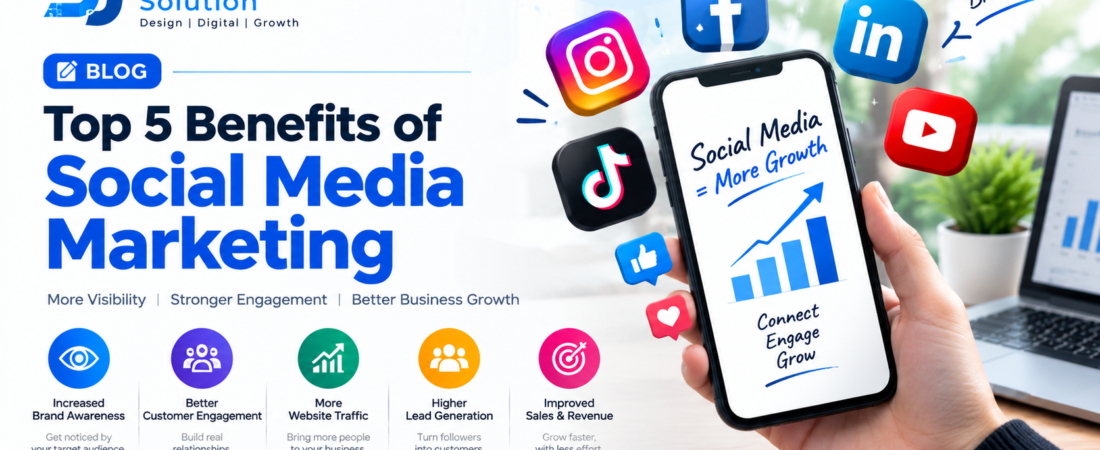
Top 5 Benefits of Social Media Marketing
For your WordPress website, the article below is structured for easy reading, search intent, and Rank Math on-page SEO. It includes five main benefits, practical examples, FAQs, and recommendations for internal linking.
1. Rank Math SEO settings
Top 5 Benefits of Social Media Marketing for Businesses
Top 5 Benefits of Social Media Marketing
social media marketing benefits
benefits of social media marketing
social media marketing for businesses
importance of social media marketing
digital marketing benefits
social media marketing strategy
Discover the top 5 benefits of social media marketing, from brand awareness and customer engagement to website traffic, lead generation, and business growth.
benefits-of-social-media-marketing
Digital Marketing
Social Media Marketing, Business Growth, Digital Marketing, Brand Awareness, Lead Generation
These fields can be entered through the Rank Math SEO panel in your WordPress post editor.
2. Complete 2,000-word blog article
Ready to copy into your WordPress Gutenberg editor. Use the article title as H1 and the numbered sections as H2 headings.
Top 5 Benefits of Social Media Marketing for Businesses
In today’s digital world, social media has become an important part of how businesses communicate with customers, promote products, and build their brands. From small local businesses to large companies, organisations use social media platforms to reach their target audiences, share valuable information, and create new business opportunities.
However, social media marketing is not just about posting pictures or collecting followers. When used strategically, it can help businesses improve brand awareness, build customer relationships, attract website visitors, generate leads, and support long-term growth.
Understanding the benefits of social media marketing can help business owners make informed decisions about their digital marketing activities. With the right content, suitable platforms, consistent communication, and performance tracking, businesses can make better use of their online presence.
In this article, SJ Digi.Tech Solution explains the top five benefits of social media marketing, how these benefits support business growth, and how you can use social media effectively.
What Is Social Media Marketing?
Social media marketing is the process of promoting a business, product, or service through social media platforms. It involves creating content, interacting with audiences, sharing business updates, running advertising campaigns, and analysing results.
Popular platforms include Facebook, Instagram, LinkedIn, YouTube, and Pinterest. The right platform depends on your target audience, business type, industry, and marketing objectives.
There are two main approaches to social media marketing.
Organic social media marketing: This involves publishing posts, videos, stories, educational content, and updates without paying for distribution. It helps businesses communicate with followers and develop a recognisable brand identity.
Paid social media marketing: This involves running advertisements to reach selected audiences. Businesses can use paid campaigns to promote products, generate enquiries, increase website traffic, and support sales.
A well-planned social media marketing strategy often combines organic content with paid advertising. Organic activities help establish a consistent presence, while paid campaigns can provide additional reach and targeted opportunities.
Why Is Social Media Marketing Important for Businesses?
Customers often research businesses online before contacting them or making a purchase. A clear and active social media presence can help people discover a brand, understand its services, and decide whether it meets their needs.
Social media also provides a direct communication channel between businesses and customers. Companies can answer questions, share useful information, introduce new services, and receive feedback.
For small businesses, social media offers an accessible way to develop an online presence. Larger businesses can use it to communicate with different audience segments, promote campaigns, and maintain customer relationships.
The results depend on the quality of your content, the relevance of your audience, the competitiveness of your market, and how consistently you manage your activities.
Let’s explore the five major benefits of social media marketing.
1. Increases Brand Awareness and Online Visibility
One of the biggest benefits of social media marketing is increased brand awareness. Before customers purchase a product or service, they first need to know that your business exists.
Social media gives businesses opportunities to introduce their brands to potential customers through posts, videos, stories, educational content, and advertising campaigns.
How Does Social Media Improve Brand Awareness?
When you publish useful and relevant content consistently, people have more opportunities to discover and recognise your business.
For example, a digital marketing agency can publish content about website design, search engine optimisation, Google Ads, and Meta Ads. These posts can help potential customers understand the agency’s expertise and available services.
Businesses can improve brand visibility by:
Publishing useful and relevant content regularly.
Using consistent brand colours, fonts, and visual designs.
Sharing educational videos and practical tips.
Participating in relevant conversations.
Collaborating with suitable creators or businesses.
Using targeted social media advertising when appropriate.
A consistent brand identity makes your business easier to recognise across different platforms.
Example of Brand Awareness Through Social Media
Imagine a local bakery that regularly posts photographs of its products, shares customer feedback with permission, and publishes videos showing how its products are prepared.
People in the surrounding area may discover the bakery through shares, recommendations, and relevant advertising. Over time, these interactions can increase recognition and encourage potential customers to explore its products.
The same principle applies to service providers, retailers, educational institutions, and professional businesses.
How to Measure Brand Awareness
Useful indicators include reach, impressions, video views, branded searches, profile visits, and mentions of your business.
These metrics help you understand whether your content is reaching people and improving recognition. They do not automatically indicate sales, so they should be considered alongside your wider business goals.
Key takeaway: Social media marketing can help your business become more visible, recognisable, and familiar to potential customers.
2. Improves Customer Engagement and Builds Trust
Another important benefit of social media marketing is the opportunity to communicate directly with your audience.
Traditional advertising often delivers a message without creating much interaction. Social media allows customers to ask questions, leave comments, share opinions, and communicate with businesses.
This two-way communication can help build stronger customer relationships.
Why Is Customer Engagement Important?
Customers are more likely to develop confidence in a business when they can find useful information and receive clear responses to their questions.
An active social media presence gives businesses opportunities to demonstrate their communication style, explain their services, and address customer concerns.
You can improve customer engagement by:
Responding to comments and messages professionally.
Answering frequently asked questions.
Publishing polls and interactive content where suitable.
Sharing useful tips related to your industry.
Encouraging genuine customer feedback.
Showing behind-the-scenes activities.
Sharing authentic testimonials with permission.
Avoid treating every interaction as a sales opportunity. Providing useful information and responding respectfully can be more valuable than repeatedly promoting your products.
How Social Media Builds Customer Trust
Trust develops when a business communicates honestly and consistently.
For example, a website design company can share educational posts explaining website security, mobile responsiveness, and website maintenance. It can also show its design process and publish genuine client feedback.
This content helps potential customers understand the company’s approach before contacting it.
Businesses should avoid fake testimonials, misleading claims, and exaggerated promises. Authentic communication is essential for maintaining credibility.
Responding to Customer Feedback
Social media also provides an opportunity to understand customer expectations.
If several people ask similar questions about your services, you can create a dedicated FAQ post or improve the information available on your website.
If customers raise concerns, respond politely and provide a suitable way to resolve the issue. For sensitive matters, move the conversation to an appropriate private channel without ignoring the customer publicly.
Key takeaway: Customer engagement helps businesses understand their audience, improve communication, and develop stronger relationships built on trust.
3. Generates Website Traffic and Quality Leads
Social media marketing can help direct interested people to your website, landing pages, service pages, and enquiry forms.
Your website can provide more detailed information than a typical social media post. It allows potential customers to explore your services, review relevant information, and take the next step.
For businesses that depend on enquiries, appointments, or quotations, social media can become an important source of potential leads.
How Can Social Media Generate Website Traffic?
You can guide users towards useful website content by sharing:
Links to informative blog articles.
Product and service announcements.
Case studies and project examples.
Landing pages for specific campaigns.
Contact pages and enquiry forms.
Offers and event registration pages.
For example, a digital marketing agency can publish an Instagram post explaining the importance of Google Ads and direct interested users to its Google Ads service page.
People who want more information can visit the website, understand the service, and submit an enquiry.
How Does Social Media Lead Generation Work?
Lead generation is the process of attracting potential customers and collecting their enquiries or contact information through an appropriate method.
Businesses can generate leads through organic content, paid advertisements, website forms, messaging campaigns, and dedicated landing pages.
A typical process looks like this:
Publish relevant content or launch an advertising campaign.
Reach an audience that may need your product or service.
Present a useful offer or clear reason to take action.
Direct interested people to a landing page, lead form, or messaging channel.
Respond to enquiries and assess lead quality.
Follow up appropriately and measure conversions.
The quality of the offer and the follow-up process can significantly influence results.
How to Improve Lead Quality
Avoid focusing only on the total number of enquiries. Some enquiries may come from people who are not suitable customers.
To improve lead quality, clearly explain your services, target relevant audiences, use suitable enquiry questions, and make your pricing or service scope clear where appropriate.
Track metrics such as website clicks, form submissions, qualified leads, cost per lead, and the percentage of leads that become customers.
Key takeaway: Social media marketing can help attract relevant visitors and create opportunities to convert interested people into potential customers.
4. Supports Cost-Effective Marketing and Targeted Advertising
Social media can provide flexible marketing opportunities for businesses with different budgets.
Creating an organic social media profile is generally free, although producing content and managing accounts requires time and resources. Paid advertising requires a budget, but businesses can often control spending and select audiences according to available targeting options.
This flexibility can make social media useful for small businesses, startups, and established organisations.
Organic Social Media Marketing
Organic marketing involves publishing content without paying for distribution.
Businesses can share educational posts, product demonstrations, company updates, customer stories, and short videos to develop their online presence.
Organic reach is not guaranteed, and results may vary by platform. Nevertheless, useful content can support audience engagement and provide material for future marketing campaigns.
Paid Social Media Advertising
Paid advertising allows businesses to promote content to selected audiences using the targeting and campaign options available on each platform.
For example, a local service provider may run a Facebook or Instagram campaign aimed at people in relevant service locations.
A business selling professional services may use LinkedIn advertising if its audience and budget justify the investment.
Before launching an advertisement, determine the campaign objective, audience, offer, budget, creative assets, and conversion measurement method.
How to Use Your Marketing Budget Effectively
Follow these practices to manage your spending:
Start with a clear and measurable campaign objective.
Select audiences relevant to your offer.
Use clear images, videos, and advertising copy.
Test different creative approaches systematically.
Track enquiries and sales, not just clicks.
Review campaign spending and lead quality regularly.
Improve the campaign based on reliable performance data.
For example, if an advertising campaign generates many enquiries but very few relevant leads, review the targeting, messaging, offer, and enquiry process before increasing the budget.
Social media marketing should be evaluated according to business outcomes rather than assumptions about low cost alone.
Key takeaway: Social media provides flexible organic and paid marketing options, helping businesses test ideas and allocate resources according to their objectives.
5. Provides Valuable Insights and Supports Business Growth
One of the most useful benefits of social media marketing is access to performance data and audience feedback.
Social media platforms provide analytics that help businesses understand how people interact with their content. Website analytics and advertising reports can provide additional information about traffic, enquiries, and conversions.
This information supports better marketing decisions.
Understanding Your Audience Through Analytics
Social media insights can help you identify which topics attract attention, which formats encourage engagement, and which content receives more shares or saves.
You may discover that educational videos perform better than promotional graphics, or that your audience responds more positively to practical tutorials than general announcements.
These findings can guide future content planning.
Useful metrics include:
Reach: The number of unique accounts exposed to content.
Impressions: The total number of times content was displayed.
Engagement: Interactions such as comments, likes, shares, and saves.
Link clicks: Clicks on links that direct people to another destination.
Website conversions: Defined actions completed on your website.
Qualified leads: Enquiries that match your target customer criteria.
Return on ad spend (ROAS): Attributed revenue divided by advertising spend, where reliable attribution is available.
Select metrics that match your objectives. For brand awareness, reach may be useful. For lead generation, qualified enquiries and cost per qualified lead may be more important.
Improving Your Marketing Strategy
Use analytics to identify what is working and what needs improvement.
If a particular topic consistently attracts relevant visitors, consider developing it into a detailed blog article, video series, or downloadable resource.
If an advertising campaign produces clicks but few conversions, review the landing page, offer, page experience, and tracking setup.
Avoid making major decisions based on a single post or a very small amount of data. Look for meaningful patterns over time.
Turning Insights Into Business Growth
Social media analytics can help businesses understand audience preferences, improve content quality, and identify opportunities for more effective campaigns.
For example, a website design business may notice that posts about mobile-friendly websites receive more enquiries than general design inspiration posts.
The business can use this information to create more educational content around mobile responsiveness and direct interested users to a relevant service page.
Analytics cannot guarantee growth, but they help businesses make more informed decisions and improve their marketing processes.
Key takeaway: Measuring performance helps businesses understand their audience, refine their marketing activities, and focus on strategies that support business objectives.
How to Get the Most Benefits From Social Media Marketing
To make social media marketing more effective, combine the five benefits with a clear and practical plan.
1. Set Clear Business Goals
Decide whether your priority is brand awareness, customer engagement, website traffic, lead generation, or sales. Choose measurable indicators to evaluate your progress.
2. Understand Your Target Audience
Research the people most likely to need your products or services. Consider their interests, challenges, location, and preferred communication channels.
3. Choose Suitable Platforms
Focus on platforms that match your audience and business goals. You do not need to manage every platform to establish an effective social media presence.
4. Publish Valuable Content Consistently
Use a content calendar to organise educational posts, short videos, service updates, and customer-focused content. Maintain a recognisable brand identity.
5. Respond to Your Audience
Answer questions, acknowledge feedback, and provide helpful information. Treat social media as a communication channel rather than simply a promotional space.
6. Track and Improve Performance
Review analytics and business outcomes regularly. Use your findings to improve content, advertising, landing pages, and lead follow-up.
Consistency, useful content, and continuous improvement provide a stronger foundation than relying on a single viral post or short-term campaign.
How SJ Digi.Tech Solution Can Help Your Business
At SJ Digi.Tech Solution, we recognise the importance of a strong digital presence for businesses that want to connect with customers and explore new growth opportunities.
A coordinated digital marketing approach can combine social media management, creative design, paid advertising, lead generation, and website development.
Our services can include:
Social media account management.
Social media content and graphic design.
Meta Ads campaign planning and management.
Google Ads campaign management.
Lead generation campaigns.
Website design and development.
Digital marketing strategy and performance reporting.
The right solution depends on your business goals, audience, industry, and available budget.
Whether you are launching a new business or improving your existing online presence, a clear marketing strategy can help you make better use of digital channels.
Ready to grow your business online? Contact SJ Digi.Tech Solution to discuss your social media marketing and digital marketing requirements.
Frequently Asked Questions About Social Media Marketing
1. What are the top five benefits of social media marketing?
The five major benefits are increased brand awareness, improved customer engagement, website traffic and lead generation, flexible marketing and advertising opportunities, and valuable audience insights that support better business decisions.
2. Why is social media marketing important for small businesses?
Social media helps small businesses introduce their services, communicate with potential customers, share useful information, and develop brand recognition. Paid advertising can also help them reach relevant audiences when the campaign is planned and measured carefully.
3. Can social media marketing increase sales?
Yes, social media marketing can support sales by helping customers discover products, understand services, visit websites, and make enquiries. Actual sales results depend on the offer, audience, competition, customer experience, and sales process.
4. Which social media platform is best for business?
There is no single best platform for every business. Facebook and Instagram can support many consumer and local businesses, LinkedIn can be useful for B2B marketing, and YouTube can help businesses share educational videos. Choose platforms based on your target audience and objectives.
5. Is social media marketing free?
Creating social media profiles and publishing organic content is generally free. However, content production, account management, and advertising can involve costs. Paid campaigns require a budget, and results are not guaranteed.
6. How long does social media marketing take to show results?
The timeframe varies according to your objectives, industry, competition, content quality, audience, and budget. Some campaigns can generate early enquiries, while building recognition and customer relationships often requires sustained effort.
7. How can I measure social media marketing success?
Measure performance against your business goals. Relevant metrics include reach, engagement, website traffic, qualified leads, cost per lead, conversion rate, and sales attributed to campaigns. Focus on meaningful business outcomes rather than follower counts alone.
Conclusion
The benefits of social media marketing extend beyond posting content and increasing followers. A well-planned strategy can help businesses improve brand awareness, develop customer relationships, generate website traffic and leads, use advertising budgets thoughtfully, and make better decisions through analytics.
To achieve meaningful results, understand your audience, choose suitable platforms, publish useful content, respond to customer questions, and measure performance consistently.
Social media marketing is most effective when it supports your wider business objectives and works alongside other digital channels, including your website, search engine optimisation, and paid advertising.
If you want to strengthen your online presence, SJ Digi.Tech Solution can help you explore social media management, Meta Ads, Google Ads, creative design, lead generation, and website development solutions.
Take the next step towards growing your business online. Contact SJ Digi.Tech Solution to discuss a digital marketing strategy suited to your business goals.
3. Featured image SEO settings
Suggested featured image
Filename:
benefits-of-social-media-marketing.webpAlt text: Top 5 benefits of social media marketing for businesses
Image title: Benefits of Social Media Marketing
Placement: Near the beginning of the blog
Format: WebP or another efficient image format
4. Internal linking strategy
Add links to relevant pages on your website using natural anchor text.
Anchor text | Link to |
|---|---|
Social media marketing services | Your social media services page |
Meta Ads management | Your Meta Ads page |
Google Ads services | Your Google Ads page |
Website design services | Your website development page |
Lead generation services | Your lead generation page |
You can also link to related articles on your website, such as Top 10 Social Media Marketing Strategies and Top 7 Strategies to Increase Brand Awareness.
For an external SEO reference, link to Google’s SEO Starter Guide. Google recommends useful, well-organised content that meets readers’ needs.